Top Cambridge International School in Lucknow | IGCSE Guide
Explore how a top Cambridge International School in Lucknow offers IGCSE education, global learning opportunities, and skills for future success.
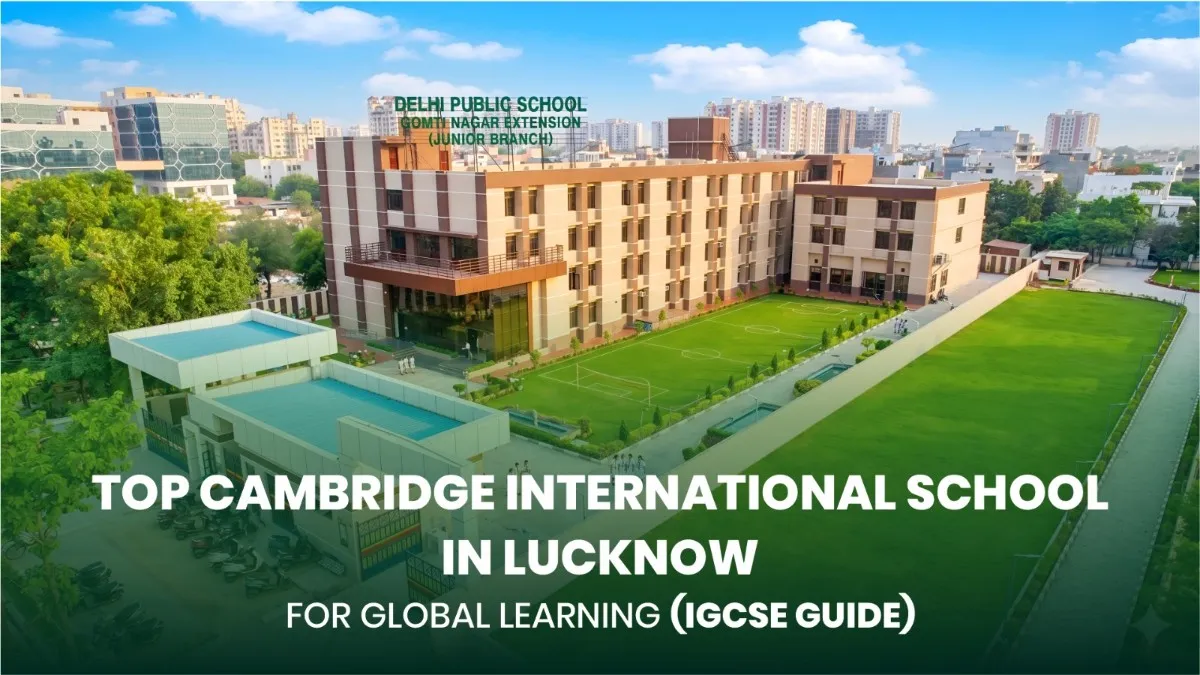
Top Cambridge International School in Lucknow for Global Learning (IGCSE Guide)
A Cambridge International school in Lucknow promises high-quality education for a future-ready generation. Here students develop skills and indulge in global learning that prepares them for every tomorrow. Let’s understand how. There was a time when choosing a school was simple. Pick a decent campus, check board results, ask two neighbours, and done. Parents mostly wanted stability. A good report card. Maybe a safe bus route. That calculation has changed now. Parents today are asking what kind of world their child is being prepared for. Because the world waiting outside school gates looks very different from the one most adults grew up in. Universities are global now. Careers are global. Even classrooms are becoming global. A child sitting in Lucknow today could end up studying in Singapore, working in Berlin, launching a startup in Bengaluru, or collaborating online with people across five countries before turning twenty-five. What serves this best? A Cambridge International School in Lucknow with the right kind of exposure. Because today, the question is much bigger than marks. Can my child think independently? Can they communicate confidently? Can they solve unfamiliar problems without waiting for instructions? Can they adapt? This guide explains what Cambridge education actually means, how the IGCSE framework works, what parents should genuinely look for during school visits, and why schools like DPS are increasingly bringing global learning environments into Lucknow classrooms. Let us clear up one confusion first. Cambridge education is not just "English-medium with a fancy brochure." A lot of schools market themselves that way. Parents usually realise the difference much later. A genuine Cambridge-Affiliated School follows an internationally recognised curriculum developed by Cambridge Assessment International Education. The focus is very different from rote-heavy systems. Students are taught to: Think critically Ask questions Apply concepts Research independently Present ideas clearly Solve real problems The goal is not just finishing the syllabus. The goal is developing capable learners. And honestly, that changes the entire classroom atmosphere. Most traditional systems reward students for remembering information accurately. IGCSE rewards students for understanding it deeply. That sounds like a small difference until you actually see it inside classrooms. A child studying environmental science in a Cambridge classroom is not just memorising definitions. They may analyse pollution patterns, debate solutions, present findings, and connect concepts to real-world situations. The learning becomes active instead of passive. 1. Conceptual Understanding Over Memorisation: Students are encouraged to understand why things happen, not just reproduce textbook answers. 2. Strong Communication Skills: Presentations, discussions, writing tasks, and project work build confidence naturally over time. 3. International Recognition: IGCSE qualifications are accepted by universities worldwide across the UK, US, Canada, Australia, Singapore, and beyond. 4. Skill-Based Assessment: Assessment includes projects, practical application, analytical writing, and problem-solving alongside examinations. 5. Subject Flexibility: Students can explore subjects based on strengths and interests instead of being boxed into rigid combinations too early. This is not just a metro-city trend anymore. Lucknow parents are increasingly looking for schools that prepare children for a much larger world than previous generations needed to navigate. And they are asking sharper questions now. Not: "What percentage did students score?" But: "What kind of people are students becoming here?" That shift matters. Strong English fluency Global university readiness Confidence in communication Future-ready learning Smaller emphasis on rote pressure Exposure to technology and research Balanced development alongside academics A top Cambridge International School in Lucknow addresses these concerns directly because the curriculum itself is designed around them. Here is where things get practical. A polished website tells you almost nothing. Every school photographs empty smart classrooms beautifully. Visit in person. And while visiting, ignore the brochure for five minutes. Instead, observe these things carefully. A real Cambridge classroom feels interactive. Are students speaking confidently? Are teachers asking open-ended questions? Do children seem curious or just quiet? Cambridge teaching requires a completely different classroom approach. Ask: Are teachers Cambridge-trained? How often is faculty training conducted? How are project-based assessments handled? These answers matter more than lobby aesthetics. Not toppers' certificates, but actual student work, such as: Projects Presentations Research assignments Lab activities. That tells you how learning really happens. Ask how the school balances: Exams Projects Practical work Presentations Skill development If everything still revolves around memorisation, the "international" label may just be decorative. This sounds subjective but it matters enormously. Confident learners usually come from healthy learning environments. Do students speak comfortably? Do they interact naturally with teachers? Do they appear afraid of making mistakes? Something interesting happens in strong early-years programmes. Children stop seeing learning as performance. They start seeing it as exploration. That difference often begins during preschool years. A good junior pre school in Lucknow does not just teach alphabets and rhymes. It develops: Curiosity Communication Emotional confidence Social interaction Motor skills Listening ability Independent thinking These become the foundation for everything later. Children who are encouraged to ask questions early usually continue doing it confidently in higher classes too. And honestly, that confidence becomes more valuable every year. What makes schools like DPS increasingly relevant in this conversation is balance. Parents do not necessarily want children disconnected from Indian values or academic discipline. They want global exposure without losing grounding. That balance matters hugely. At DPS, the focus is not simply on importing an international curriculum. It is on building an environment where: Academic rigour remains strong Communication skills develop naturally Technology becomes part of learning Students build confidence gradually Co-curricular exposure stays meaningful Global learning exists alongside cultural grounding That combination is what many modern families are actually searching for. Not education that feels foreign but education that feels future-ready. A genuinely strong Cambridge-Affiliated School usually feels different almost immediately. You will notice: Students asking questions comfortably Teachers encouraging discussion Less fear around mistakes More emphasis on understanding Better communication confidence Visible student work and projects A calmer relationship with academics And strangely enough, serious learning often happens better in exactly these environments. The best Cambridge International School in Lucknow is not necessarily the one with the biggest building or the most dramatic marketing campaign. It is the one preparing children for the world they are actually going to enter. A world that rewards curiosity, communication, adaptability, independent thinking, and emotional confidence just as much as academic scores. That is what strong Cambridge education aims to build. And schools like DPS are increasingly bringing that style of global learning into Lucknow in ways that feel ambitious without feeling disconnected from reality. Because good education today is not about choosing between academics and future readiness anymore. The best schools understand that both need to happen together. Ans - Among the many reputable Cambridge International schools in Lucknow, DPS has been consistently making a mark. It is followed by Allenhouse Public School and City Montessori School. Ans - CBSE follows a structured national curriculum focused on Indian competitive exams, while IGCSE emphasises conceptual learning, research, analysis, and international academic standards. Ans - Yes. Cambridge qualifications are recognised by universities in more than 160 countries and help students build strong academic and communication skills for global admissions. Ans - Parents should look at teacher interaction, safety, communication development, play-based learning, and how comfortable children seem in the environment. Early confidence matters as much as academics. Ans - No. IGCSE schools also focus on creativity, communication, leadership, problem-solving, and co-curricular learning to support overall development.Introduction
What is a Cambridge International School in Lucknow?
What Makes the IGCSE Curriculum Different?
Key Features of IGCSE Learning
Why Parents Are Picking A Cambridge International School in Lucknow
Parents Today Are Looking For:
What Should Parents Actually Look For During a School Visit?
1. Watch the Classrooms
2. Ask About Teacher Training
3. Ask to See Student Work
4. Understand Assessment Style
5. Observe Student Confidence
Why Early Learning Matters More Than Parents Realise
How DPS Approaches Global Learning
Signs You Have Found the Right Cambridge School
Conclusion
Your Queries Answered
1. Which is the best Cambridge International School in Lucknow?
2. What is the difference between CBSE and IGCSE curriculum?
3. Is a Cambridge-Affiliated School good for higher studies abroad?
4. What should parents look for in a junior pre school in Lucknow?
5. Does IGCSE focus only on academics?
