Parent-School Partnership: Key to Every Child's Success
Discover how a strong parent-school partnership builds confidence, improves learning, and supports your child's overall growth and success.
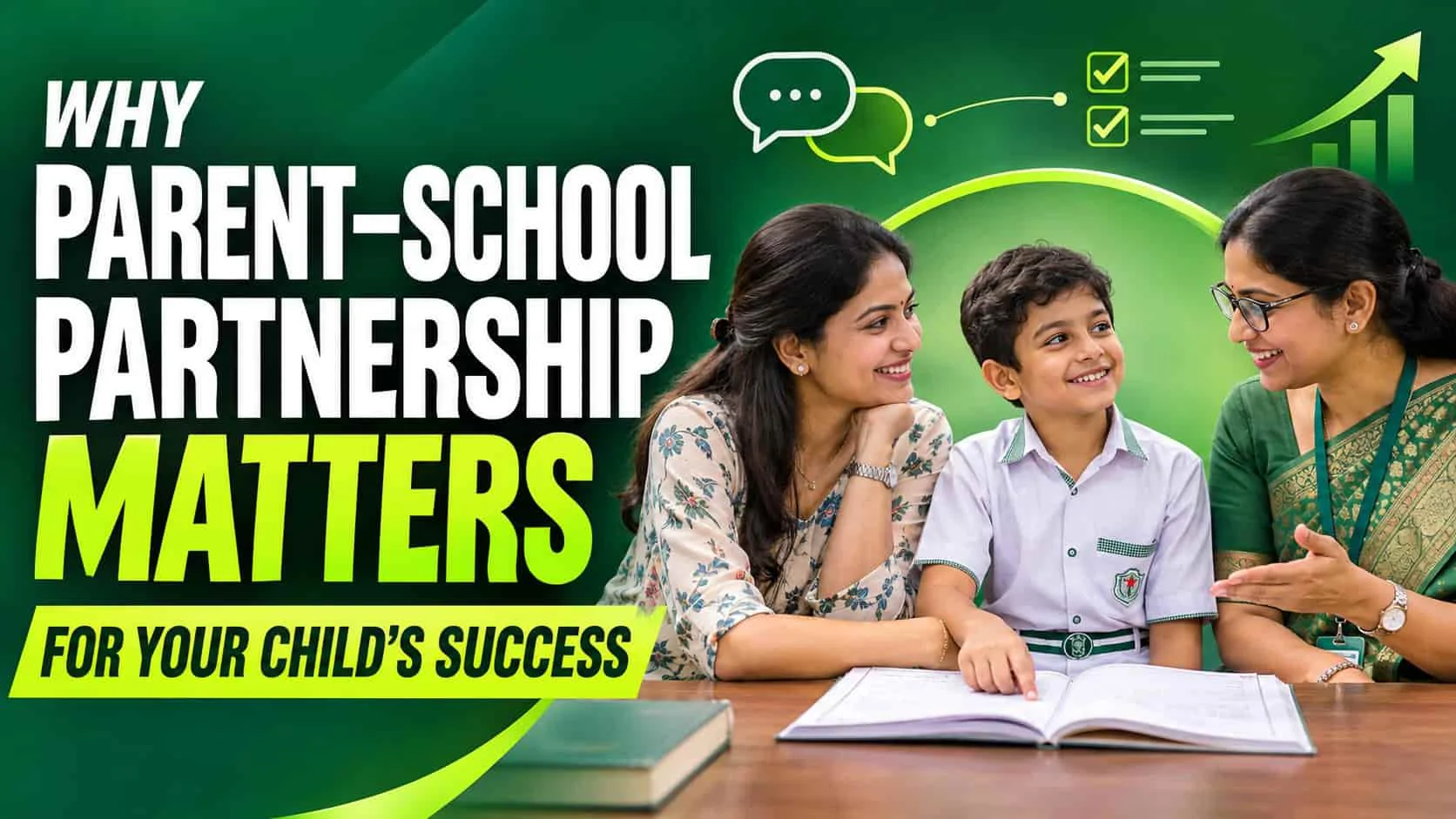
Why Parent-School Partnership Is Important for a Child's Success
Introduction
Ask any experienced educator what separates a thriving student from a struggling one, and the answer rarely starts with the curriculum alone. It usually comes down to whether parents and the school are genuinely working together. This is one reason families searching for a CBSE school in Lucknow increasingly look beyond academics, facilities and fees, they ask how actively a school involves parents in their child's daily learning. A strong parent-school partnership isn't a nice-to-have add-on; decades of research tie it directly to better grades, stronger emotional regulation and fewer behavioural issues. This guide unpacks exactly why that partnership matters, what gets in its way, and how both schools and parents can build it deliberately.
What Is a Parent-School Partnership?
A parent-school partnership is a two-way, ongoing relationship where parents and teachers actively share responsibility for a child's learning, rather than the school working in isolation and parents only hearing about problems after they occur. It matters because children spend their formative years moving between two environments, home and school, and when those environments send consistent, aligned messages, children learn faster and feel more secure doing it.
-
It treats parents as co-educators, not passive recipients of report cards
-
It creates consistency between what a child experiences at home and in the classroom
-
It catches academic or emotional struggles early, before they become serious problems
-
It builds a child's sense that the adults around them are working together, not separately
How Does Parent Involvement Affect a Child's Academic Performance?
Parent involvement has one of the most consistently documented effects in education research. A large meta-analysis by William Jeynes, covering 77 studies and over 300,000 students, found that children with highly involved parents scored about 0.5 to 0.6 of a standard deviation higher on academic outcomes, grades and overall achievement than their peers. That gap shows up well before report cards, in attendance patterns, classroom behaviour and homework consistency.
-
Students with involved parents tend to have fewer unexcused absences and tardiness issues
-
Regular parent-teacher communication is linked to fewer classroom behavioural problems
-
Homework completion rates improve when parents are aware of assignments and deadlines
-
Involvement at home (reading together, discussing school) often matters more than how often parents physically visit the school
How Does Parent-School Partnership Support a Child's Psychological and Social Development?
Children are less anxious about navigating two separate worlds with different expectations when home and school are aligned. Children who see their parents and teachers communicating openly are likely to develop greater emotional resilience, because problems are addressed collaboratively rather than being a source of secrecy or shame.
-
Children with aligned home-school environments often show lower anxiety around academic performance
-
Open communication models healthy conflict resolution, which children absorb and replicate socially
-
Emotional resilience grows when children see adults working through challenges together rather than blaming each other
-
Social skills improve when parents reinforce, rather than contradict, the behavioural expectations set at school
What Barriers Stand in the Way of Parent-School Partnership?
Most parents want to be involved, the barrier is usually logistics or communication style, not willingness. Working parents can't always attend daytime events, some families face language or cultural gaps with how a school communicates, and some simply don't know what involvement beyond PTMs could even look like. Naming the barrier is usually the first step to solving it.
How Do Reputed Schools in Lucknow Build Strong Parent-School Partnerships?
A reputed school in Lucknow usually treats parent partnership as structured practice, not occasional goodwill. That means a functioning Parent-Teacher Association, regular workshops that go beyond academics, and clear channels for raising concerns, backed by communication tools parents actually use day to day.
-
An active Parent-Teacher Association (PTA): A properly structured PTA, with parent vice-chairpersons, joint secretaries and representatives, gives families a real voice in school decisions, not just a ceremonial committee. At DPS Jankipuram, our PTA is chaired by Principal Ms. Niiru Bhaskarr and includes parent representatives who actively bridge communication between families and the administration.
-
Parents as co-educators, not just attendees: Inviting parents to serve as judges or volunteers during school events and exhibitions, such as our event The Platform, gives them a genuine stake in school life beyond parent-teacher meetings.
-
Regular parenting workshops: Sessions on topics like brain architecture, screen time management, separation anxiety and daily routines equip parents with practical tools, not just updates on their child's marks.
-
Structured grievance redressal: A clear, principal-led communication channel for concerns builds trust, since parents know exactly where to go and what to expect when something needs addressing.
-
Digital communication tools: Apps and portals for real-time attendance, homework and announcement updates reduce the information gap that often causes parents to feel disconnected.
What Can Busy Parents Do to Stay Genuinely Involved?
Involvement doesn't require attending every school event, it requires consistency in the small things. A five-minute daily check-in about school, asking specific questions at parent-teacher conferences, and creating a predictable homework routine at home all build a stronger partnership than occasional, high-effort gestures.
-
Ask specific questions at PTMs: "What does my child struggle with that I don't see at home?" works better than "How is my child doing?"
-
Set a consistent, distraction-free homework time and space at home, even just 30 minutes
-
Use the school's communication app regularly instead of only checking it when there's a problem
-
Read or discuss what your child is learning, even briefly, rather than only reviewing marks
-
If daytime events aren't possible, ask the school directly about recorded sessions or evening alternatives
Our Philosophy: How DPS Jankipuram Builds Parent-School Partnership
As a CBSE school in Lucknow, our philosophy at DPS Jankipuram is simple: parents are co-educators, not spectators. We build this into the admission process itself, giving families an honest, transparent look at campus life, daily routines and teaching methods from day one, so the partnership starts before a child even joins us, not after the first report card.
-
An active PTA, led by our Principal, that gives parents a genuine voice in school decisions
-
Regular parenting sessions with experts like Allen Nurture and Nature Nurture on topics from brain development to emotional well-being
-
Opportunities for parents to participate directly in school life, as volunteers and judges at events like The Platform
-
A structured, principal-led grievance redressal process so concerns are addressed transparently, not left unresolved
-
Transparent onboarding that sets collaborative expectations from the very start of a family's journey with us
We welcome parents to experience this partnership firsthand, visit our campus or raise an admission enquiry to see how we work with families, not just for them.
Conclusion
Parent-school partnership isn't a soft, optional extra, it's one of the most consistently proven levers for a child's academic, emotional and social success. The research is clear, the strategies are practical, and the barriers, time, communication, awareness, are all solvable when both sides commit to working together. For parents evaluating a CBSE school in Lucknow, how a school builds this partnership is worth examining as closely as its academics or facilities.
At DPS Jankipuram, we'd welcome the chance to show parents exactly how we put this philosophy into practice. Reach out to raise an admission enquiry or ask us directly about our PTA, workshops and communication channels.
Your Queries Answered
How often should parents communicate with teachers?
Consistency matters more than frequency. Most parents benefit from brief, regular check-ins via the school app combined with attending scheduled conferences. However, parents should reach out immediately whenever a specific academic, social, or emotional concern arises rather than waiting for formal meetings.
What questions should parents ask during parent-teacher conferences?
Ask specific, open-ended questions to get actionable insights. Key questions include: "What does my child struggle with that I might not see at home?", "How does my child interact socially with peers?", "What is the single best thing I can do at home right now to support their learning?".
Can a strong parent-school partnership help with exam anxiety?
Yes. When parents and teachers align on expectations and stress signals, they create a unified support system. This prevents the child from feeling caught between conflicting pressures at home and school, directly easing exam-related anxiety.
What should working parents do if they can't attend daytime school events?
Proactively request flexible options. Most schools offer evening meetings, recorded updates, or quick one-on-one virtual calls. Communicating schedule constraints early ensures parents stay connected without non-attendance being mistaken for disengagement.
Does parent involvement matter less as children get older?
No, but the nature of involvement changes. While younger children benefit from a hands-on physical presence in the classroom, older students benefit more from parents providing emotional support, guiding academic choices, and staying informed while encouraging autonomy.
Read More : How DPS Jankipuram Creates a Positive Learning Environment for Students
