Why Enroll Your Child in a Play School in Lucknow?
Discover why early play school enrollment in Lucknow supports social, emotional, and learning skills while helping children build confidence for future education.
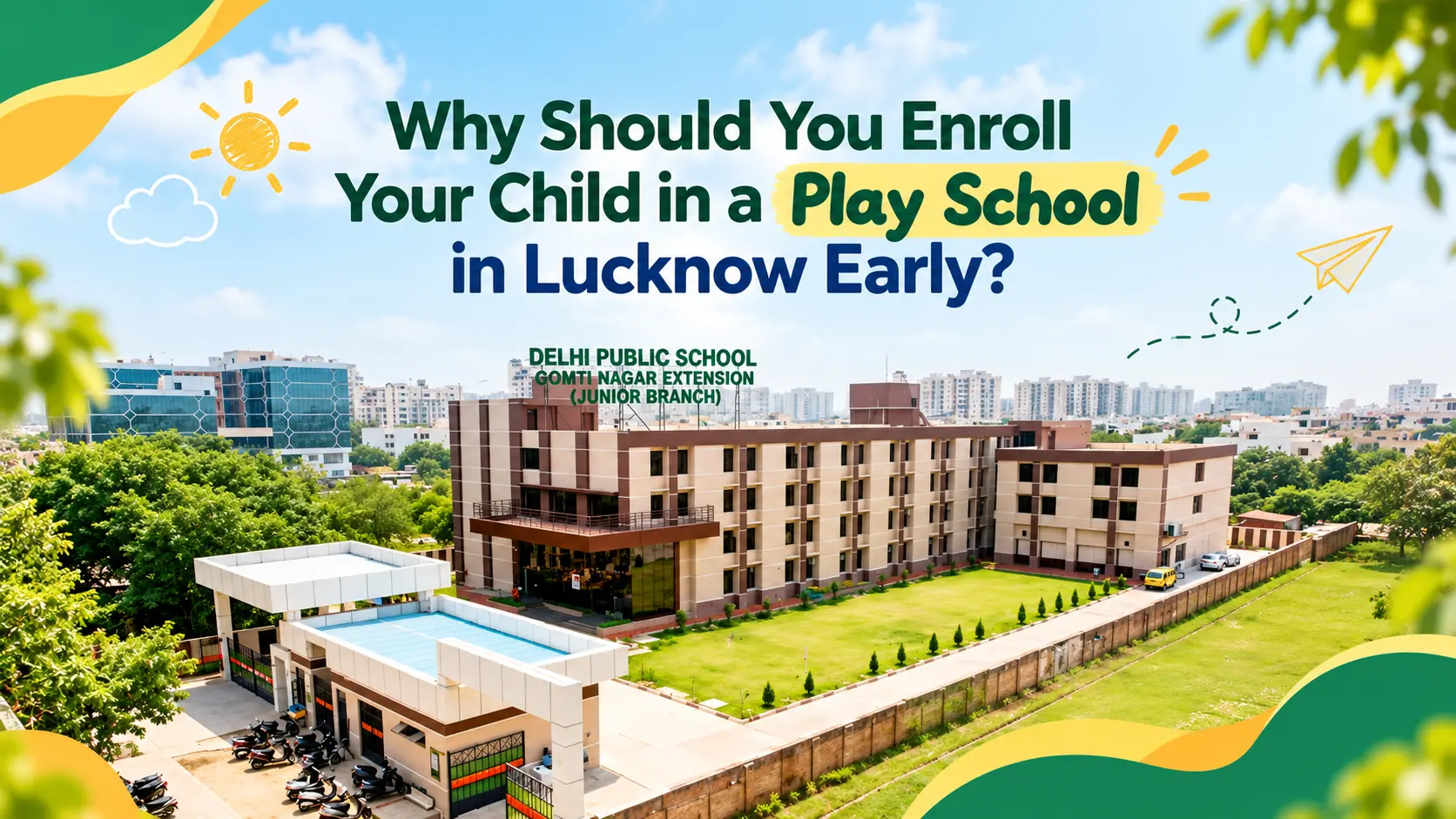
Why Should You Enroll Your Child in a Play School in Lucknow Early?
There is a version of this conversation that is about pressure. About early admission, competitive seats and making sure your child does not fall behind before they have even started. This blog is not that conversation. The case for enrolling your child in a good play school in Lucknow early is not about anxiety or competition. It is much simpler and much more positive. The early years are when the brain is most receptive, when learning happens most naturally and when the right environment does the most good. A child between two and six is not waiting to start learning. They are already learning, constantly, from everything around them. The question is only whether the environment doing the teaching is a good one. At DPS Gomti Nagar Junior, we have built our early childhood programme around this understanding. This blog explains what early enrolment actually gives a child and why the timing genuinely matters. This is not a parenting opinion. It is neuroscience and it is worth understanding before anything else. The human brain forms more than one million neural connections per second during the first few years of life. By age five, the brain has reached approximately 90 percent of its adult size. The experiences a child has during this window, the language they hear, the problems they are given space to solve, the relationships they form, the physical environments they move through, directly shape the neural architecture they carry for the rest of their lives. Language development is most rapid between ages two and five. Children exposed to rich, varied language during this period develop vocabulary and communication skills that compound across every subsequent year of education Emotional regulation, the ability to manage frustration, wait for a turn, recover from disappointment, is learned primarily through social experience in early childhood. It cannot be effectively taught later as a concept. It has to be practised during the years when the brain is building the circuits for it Executive function, including the ability to focus, plan and control impulses, develops most dramatically between three and five. The environments that support this development produce children who are meaningfully better equipped for formal schooling Curiosity is a habit of mind that is built early or built with difficulty later. A child whose early years rewarded questions and exploration arrives at primary school with a relationship to learning that is almost impossible to manufacture after the fact A good playway school in Lucknow does not teach these things in the way a classroom teaches geography. It creates the conditions for them to develop, through play, through relationship, through appropriately designed challenge and exploration. Quality early childhood education builds skills that support a child’s future learning. Early enrolment helps children in many ways: Stronger learning foundations Better social skills How to share and cooperate How to solve conflicts How to understand others Early support for learning needs Easier transition to formal school Classroom routines Group activities Listening to teachers Learning away from parents For families in Lucknow, this makes the move to Class 1 smoother. Children enter school feeling comfortable and ready to learn instead of spending months adjusting to a new environment. Not all early childhood programmes are equal and the differences matter more at this stage than at almost any other. Here is what genuinely distinguishes a strong programme from one that simply occupies children for a few hours. The adult in the room during these years is the most important variable. Look for teachers with specific early childhood education training, not simply general teaching qualifications or warm personalities alone. The two are not mutually exclusive, but training matters. Play is not the absence of learning. It is the primary vehicle for learning at this age. A good play school in Lucknow uses play deliberately, with teachers who understand what each activity is developing and how to extend it. Look for classrooms where children are active and purposeful, not simply occupied. For children between two and four, a ratio approaching one adult to eight children is the reasonable standard. Beyond one to twelve, individual attention becomes structurally impossible regardless of how committed the teachers are. Every child adjusts to separation at a different rate. A school with a genuine, gradual settling-in process, one that involves parents in the early days and measures progress by the child's comfort rather than the calendar, understands child development. A school that expects all children to adjust in the same week does not. You should know how your child's day actually went, not receive a generic "they were fine." Look for a school that tells you something specific about what your child did, how they engaged and what they are working on. At DPS Gomti Nagar Junior, our early childhood programme is built around one governing understanding: children between two and six are not small students waiting to be taught. They are active, curious, constantly learning human beings who need the right conditions to develop. Every decision we make, about classroom design, daily routine, teacher training and family communication, flows from that understanding. Activity-based learning replaces instruction at every level of our early childhood programme. Children learn through doing, building, exploring and playing, with teachers who know what each experience is building and how to extend it Small group sizes maintained deliberately so every child is genuinely known, not just enrolled Language-rich environment across the day, in English and Hindi, building the vocabulary and communication confidence that formal schooling builds on Outdoor learning integrated into the daily schedule, because physical exploration and environmental engagement are as important to early development as anything that happens indoors A structured settling-in programme that takes two weeks rather than two days, because we take a child's sense of security seriously as the foundation of everything else Regular, specific parent communication because the partnership between home and school matters most during these early years, when the two environments need to be genuinely aligned Our programme covers Playgroup through UKG, welcoming children from approximately age two, with each level designed around the specific developmental needs of that stage rather than a compressed version of primary school. The honest answer is: earlier than most parents act on it. Most families begin thinking seriously about a playway school in Lucknow when their child is approaching three or four. By that point, the best programmes in the city have often filled their younger cohorts for the coming year. Playgroup (age two to three) seats are the most limited and fill the earliest Nursery and LKG seats follow shortly after Families who enquire a full year before their child is due to start are in a meaningfully better position than those who begin in January for an April start Beyond availability, there is a developmental argument for earlier enrolment. The benefits of quality early childhood education accumulate over time. A child who joins at two and a half has more time in a well-designed environment than one who joins at four and the difference shows in how prepared they are for primary school. The early years are not just preparation for school. They are some of the most important learning years for a child. The habits, skills and confidence built during this time shape future learning. Choosing the right play school in Lucknow early can make a lasting difference. At DPS Gomti Nagar Junior, we believe these years deserve care, attention and quality education. Our programme focuses on helping children learn through play, exploration and meaningful activities. If you are looking for a nurturing early learning environment, we would be happy to welcome you and show you what we offer. Most quality play schools in Lucknow accept children from around two years of age for Playgroup. Early learning helps children develop language, social and thinking skills before formal schooling begins. A play school focuses on learning through play. Children develop communication, creativity and problem-solving skills through activities, interaction and exploration. A good playway school builds early foundations in language, numbers, social skills and independence. It helps children adjust better to primary school and enjoy learning. Parents should consider teachers, safety, child-to-teacher ratio, routines and the learning approach. A good play school should have a clear purpose behind every activity. DPS Gomti Nagar Junior welcomes children from around two years of age through Playgroup, Nursery, LKG and UKG up to age six. Each level includes age-appropriate activities, small group learning and a structured approach to support every child’s growth.The first five years of a child's life build the foundations (cognitive, emotional and social). Everything else in their education rests on these. Choosing the right play school in Lucknow early is not about getting ahead of the competition. It is about giving those foundations the best possible conditions to form. This blog covers the research, the practical benefits and what DPS Gomti Nagar Junior specifically offers families making this decision.
Introduction
What the Brain Is Doing Between Ages Two and Six
What Early Enrolment Specifically Gives a Child
Children who attend quality preschools before age five often develop better literacy and numeracy skills. This happens because early programmes build thinking and problem-solving skills.
Early interaction helps children learn skills that support both academic and personal growth:
Good early childhood programmes can identify developmental concerns early. This allows children to receive the right support at the right time.
Children become familiar with:What to Look for in a Play School in Lucknow
Trained early childhood educators, not just caregivers
Play-based learning with genuine structure
Appropriate adult-to-child ratios
A settling-in process that takes the child's pace seriously
Communication with parents
How DPS Gomti Nagar Junior Approaches Early Childhood Education
When Is the Right Time to Enrol?
Conclusion
Your Queries Answered
What is the right age to enrol a child in a play school in Lucknow?
What is the difference between a play school and a regular preschool in Lucknow?
How does early enrolment in a playway school in Lucknow benefit a child academically?
What should parents look for when choosing a play school in Lucknow?
What age groups does DPS Gomti Nagar Junior's early childhood programme cover?
Read More : Why Parents Prefer Cambridge Board Schools in Lucknow for Quality Education
