Best Play School in Lucknow | PG, Nursery & Kindergarten
Find the best play school in Lucknow offering Play Group, Nursery, and Kindergarten programs. Explore quality early education to give your child the perfect start.
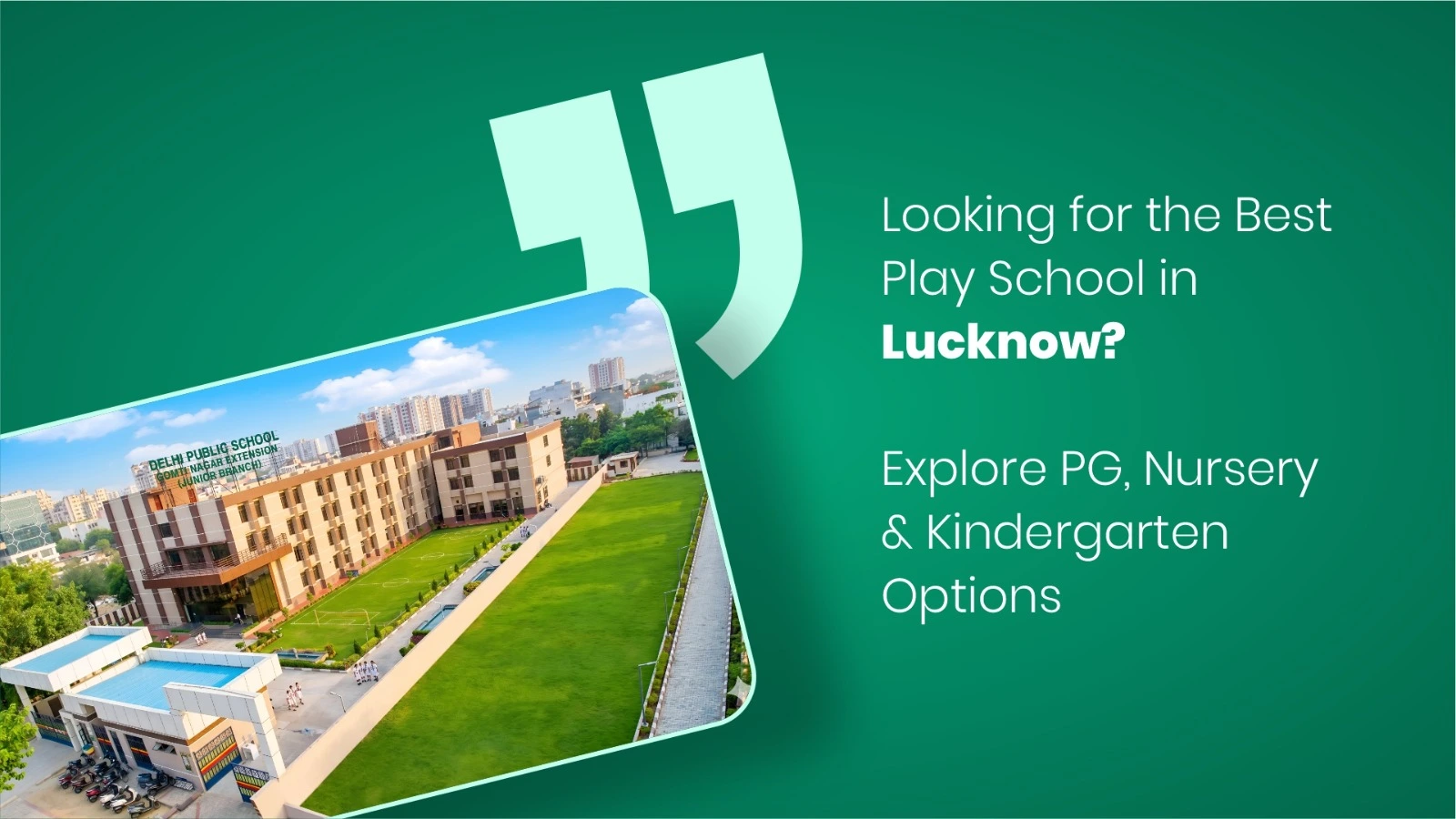
Looking for the Best Play School in Lucknow? Explore PG, Nursery & Kindergarten Options
PG, Nursery, LKG, UKG are some options that often leave parents unsure. They wonder what the difference is or which one their child should start with. This guide clears all of that up, covers what actually makes a best play school in Lucknow worth choosing and gives parents the practical framework to decide with confidence. As a parent, you often think about bigger goals of who your child will become, what career would they choose and where would their future take them. Amidst this, nobody quite prepares you for the morning you realise your two-year-old needs to start going somewhere. And suddenly there are seventeen options within five kilometres, each with a different name, a different age requirement and a brochure that uses so many fancy words in the first paragraph. When you look into classes listed, there is PG, Nursery, LKG, UKG, Preschool, Playway school, Montessori and whatnot. The terminology alone is enough to make a parent feel like they missed an important orientation session. This guide exists to cut through all of that. It explains what each stage actually means, what your child genuinely needs. We empower you with all the necessary info, so that when you visit a preschool in Lucknow and try to decide whether it is the right place for your child, you know it all! Before getting into the differences between stages, it helps to be clear about what a play school actually is and what it is not. A play school is not a place where children sit at desks and learn to read and write earlier than they would otherwise. That is not early childhood education. That is premature formal instruction and the research on it is not kind. A genuine play school is an environment designed for children aged roughly 1.5 to 3 years, built around the understanding that at this age, play is not a break from learning. Play is how learning happens. Everything meaningful that a two-year-old develops, they do it through play, including Language Social skills Emotional regulation Fine and gross motor capability Basic confidence to exist in a world beyond their immediate family The rhymes make language feel musical. Storytelling builds vocabulary and imagination simultaneously. Sensory activities develop nerve pathways in ways that sitting quietly never could. Group interaction teaches, for the first time, that other children exist and have their own wants and feelings. A playway school in Lucknow worth choosing understands this distinction. It is not rushing children toward academic readiness. It is building the human foundation that academic readiness will eventually rest on. This is the question most parents have and nobody has answered clearly. Here it is. Every best play school in Lucknow will tell you it is safe, warm and learning-focused. Most of them believe it. Not all of them have built it. Here is what to actually look for. A school that mentions safety in its brochure and a school that has built safety into its physical environment are different things. Look for CCTV coverage in all areas, including classrooms, corridors and outdoor spaces. Look for controlled entry points where visitor access is managed and monitored. Ask about transport safety specifically if your child will use the school bus. Physical safety is the baseline. It is not something to feel grateful for. It is something to expect as a minimum. At the PG and Nursery level, this matters more than at any other stage of schooling. A two-year-old in a room with twenty other two-year-olds and one teacher is not in an environment where their individual needs can be noticed and responded to. The ratio should be low enough that a teacher can genuinely see each child, every day. Ask the school directly. What is your student-teacher ratio at PG level? At Nursery level? The answer tells you whether individual attention is a reality or a marketing line. Early childhood teaching is a specific discipline. It is not easier than teaching older children. In many ways it is harder. A teacher who is warm and kind but lacks training in child development will respond to a two-year-old's behaviour differently. The one who is will understand what that behaviour means developmentally. When you visit the best play school in Lucknow, ask about teacher qualifications specifically. Early Childhood Education training, Montessori certification or equivalent qualification in child development is what you are looking for. The best way to understand and gauge is to walk into the classroom during a session if the school allows it. See what the children are doing. Are they engaged in activities that feel purposeful and self-directed? Or are they sitting in rows being asked to repeat things? Good early childhood classrooms are organised into activity zones. A reading corner. A sensory table. A construction area. An art space. Children move between them according to their interest, with a teacher facilitating them. The noise level is higher than a traditional classroom. That is a sign of engagement. Children at this age put things in their mouths. They touch everything. They share everything. The hygiene standards of a preschool environment directly affect the health of every child in it. Clean bathrooms that are the right size for small children. Regular cleaning schedules. Hand-washing protocols that are actually practiced. Gross motor development (running, jumping, climbing, balancing) requires outdoor space and unstructured time to use it. A preschool without an outdoor play area is asking children to develop physically in an environment that does not support physical development. Look for it specifically. At this age, parents are not just observers. They are partners. A good preschool keeps parents genuinely informed about what their child is doing, how they are settling, what the teachers are noticing. This is not about daily reports on every activity. It is about a school that treats parents as people who deserve real information rather than reassuring generalities. Most good preschools in Lucknow draw from multiple methodologies rather than following a single one rigidly. Here is what the main approaches actually involve. The best playway school in Lucknow will draw on all of these at different points. Because different children respond differently to different approaches and because a good early childhood environment does not commit doctrinally to a single method at the expense of what individual children actually need. Here is the practical guidance to pick the best play school in Lucknow: A child who is 2.5 years old but has never been separated from a parent for more than an hour may need more time before starting Nursery. A child of the same age who has been in group settings, who communicates clearly and manages transitions without significant distress, may be fully ready. This is the most informative single indicator of readiness. A child who separates with some initial upset but settles within a few minutes is ready. A child who remains significantly distressed after the settling-in period may need more time or a gentler transition, not because anything is wrong with them, but because they are not yet at the developmental stage where the separation feels manageable. An introverted child in a high-stimulation environment? No. Even if the school is excellent for other children. Also, a highly social child who needs peer interaction may be ready for structured group settings earlier than average. A long daily commute at this age is tiring and disruptive to routines. A shorter journey means more time for rest, for family and for the unstructured play at home that complements the structured play at school. Not during an open day. Not during a tour. During a regular session, with children present, doing what they normally do. What you observe in twenty minutes of that is worth more than any brochure. Here is the science, briefly and honestly. The human brain develops faster in the first five years than at any subsequent period of life. By age five, approximately 90% of brain development has occurred. The experiences a child has during these years physically shape the neural pathways that will underlie every subsequent capability. This is not an argument for pressure or early academic drilling. It is an argument for quality. For environments that are stimulating, emotionally safe, language-rich and responsive to individual children. For adults who understand child development and know how to support it. Language development is perhaps the most significant outcome of a good early childhood education. Children in language-rich environments, where adults speak with them, read to them, respond to their communication attempts with patience and interest, develop vocabulary and comprehension that predicts academic performance across every subsequent school stage. Emotional confidence developed in the early years. It includes the sense of being safe, seen and capable. It is the foundation on which all subsequent learning rests. A child who enters primary school with a positive relationship with the learning environment, with some experience of managing the social demands of a group and with a basic belief in their own capability, is in a fundamentally different position from one who arrives anxious, socially inexperienced and uncertain. The best play school in Lucknow is not building academic skills. It is building the person who will eventually acquire those skills or struggle to, depending on the foundation. There is no universally best play school in Lucknow. There is only the right one for your specific child. The school that follows the points discussed above is certainly the right school. Also, every child develops differently. The child who is ready for Nursery at 2.5 and the child who flourishes only once they begin LKG at four are both following a normal developmental path. Your job as a parent is to choose the most appropriate school that brings out their uniqueness. Visit campuses. Observe actual sessions. Trust your instincts when you walk into a room full of small children and feel the energy is good. We welcome you to DPS! Ans - A play school usually focuses on toddlers aged 1.5 to 3 years through play-based learning and social interaction. A preschool covers the full early years journey, including Play Group, Nursery, LKG and UKG. Ans - Most children start Play Group between 1.5 and 2.5 years. Along with age, parents should also consider emotional readiness, curiosity and comfort around other children. Ans - Observe classroom interaction, teacher behaviour, cleanliness, safety measures, student-teacher ratio, outdoor play space and how children are engaged during regular school hours to pick the best play school in Lucknow. Ans - Not necessarily. Montessori focuses on independence and self-paced learning, while play-way learning focuses on activity-based and social learning. Good preschools often combine both approaches. Ans - Early childhood education builds communication, confidence, social skills, emotional security and learning habits during the most important years of brain development.What is a Play School?
PG, Nursery, LKG, UKG - What is the Actual Difference?
What Makes the Best Play School in Lucknow?
Safety
A Student-Teacher Ratio That Makes Individual Attention Possible
Trained Teachers Who Understand Child Development
A Curriculum Built Around Play
Cleanliness and Hygiene
Outdoor Play Space
Honest, Regular Parent Communication
Teaching Approaches: What They Mean in Practice
How to Choose the Right Stage for Your Child
Age is the starting point but not the whole answer
Observe how your child separates
Consider personality
Distance from home matters
Visit at a time when the school is actually running
Why Early Childhood Education Matters More Than Most Parents Realise
Conclusion
Your Queries Answered
1. What is the difference between a play school and a preschool in Lucknow?
2. What is the right age to start Play Group in Lucknow?
3. What should parents check during a play school visit?
4. Is Montessori better than play-way learning for preschool children?
5. Why is early childhood education important for long-term development?
