Right Age to Join a Play School in Lucknow for Kids
Discover the right age for kids to join a play school in Lucknow and learn how early schooling supports social skills, confidence and child development.
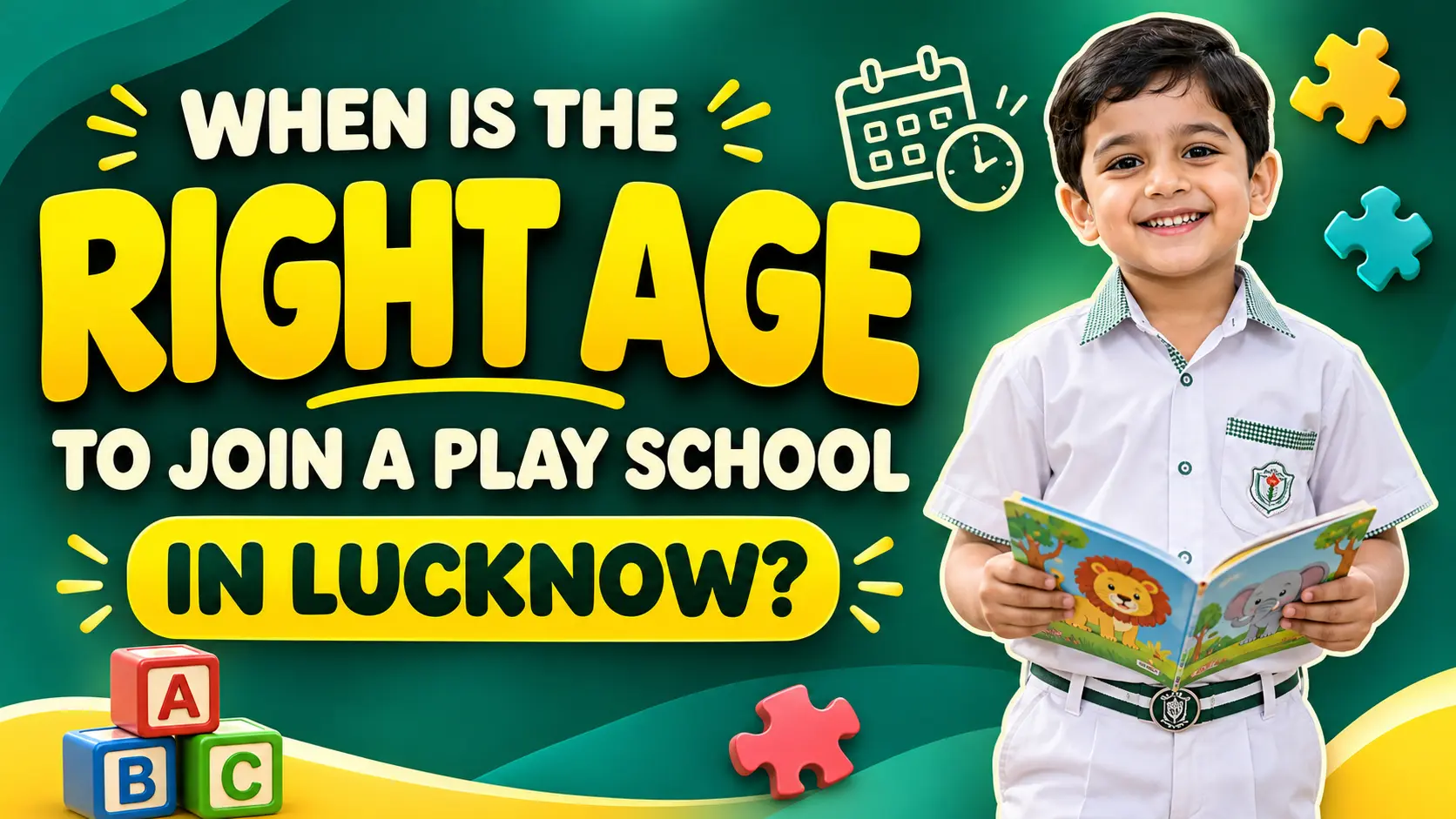
When is the Right Age to Join a Play School in Lucknow?
Introduction
"Is my child ready yet?" is probably the single most common question parents ask before enrolling in a play school in Lucknow. Most children begin somewhere between 2 and 3 years of age, but the right age for one child isn't automatically right for another, it depends on developmental readiness, temperament and how comfortable they are away from parents, not just the calendar. Rushing admission because a neighbour's child started earlier, or delaying it out of anxiety, can both work against a child's early experience of school. This guide breaks down age criteria by stage, the real readiness signs to look for and what NEP 2020 actually says about early childhood entry, so parents can decide with confidence rather than guesswork.
What Is the Right Age for a Child to Start Play School in Lucknow?
Most children are ready to start play school in Lucknow between 2 and 3 years of age. It is once they can manage short periods away from parents and show interest in other children. The exact age depends partly on the stage, Playgroup, Nursery or Kindergarten, each sits at a slightly different entry point in a child's early development.
-
Playgroup is typically the earliest entry point, around age 2
-
Nursery usually follows around age 3, often the first formal pre-primary step
-
Kindergarten (LKG) generally starts around age 4, building toward Class 1 readiness
-
Age criteria can vary meaningfully between schools, so always confirm the exact cut-off directly
What Are the Age Criteria for Playgroup, Nursery and LKG?
Each stage of pre-primary education targets a different developmental window. It moves from pure social and sensory play toward early structured learning. Knowing these distinctions helps parents place their child at the right entry point instead of defaulting to whichever class sounds most advanced.
What Is the Right Age to Start Playgroup?
-
Playgroup is generally suitable for children aged 2 to 2.5 years old
-
It focuses almost exclusively on social exposure, sensory play and gentle separation from parents, not any academic content.
-
It’s not so much learning letters, it’s about a child being comfortable in a group setting for the first time.
At What Age Should a Child Join Nursery?
-
Nursery generally starts around age 3
-
It is once a child can follow basic routines and engage in short group activities
-
They include vocabulary building, simple rhymes and structured play begin to take a more consistent shape.
When Should a Child Start LKG?
-
LKG (Lower Kindergarten) typically begins around age 4
-
It is about building toward the readiness needed for Class 1
-
By this stage, children are usually expected to sit through slightly longer activities, follow multi-step instructions and engage with early pre-literacy and pre-numeracy concepts.
How Do You Know If Your Child Is Ready for Play School?
Readiness isn't about academic skill, it's about a handful of practical, observable behaviours that make the daily experience manageable for a young child. Four signs matter most: basic communication, comfort away from parents, following simple instructions and genuine interest in other children.
Can Your Child Communicate Basic Needs?
A child doesn't need full sentences, but should be able to signal hunger, discomfort or the need for the washroom, through words, gestures or simple phrases. This lets a teacher respond appropriately without constant guesswork.
Is Your Child Comfortable Spending Time Away from Parents?
If a child can tolerate some separation, even 30-60 minutes without significant distress, they are ready for short school days. Complete comfort isn't required on day one, but visible panic at every separation is a sign to wait a little longer.
Can Your Child Follow Simple Instructions?
A child who follows one or two-step instructions , such as " pick up the toy " or " come sit here", shows that he or she can respond to a teacher's guidance in a group setting . You don’t have to be perfect to begin; this skill develops with practice.
Does Your Child Show Interest in Playing with Other Children?
Curiosity about other children, even if it's just watching them before joining in, signals social readiness. A child who actively avoids or seems distressed around peers may benefit from more supervised playdates before formal school.
What Are the Benefits of Starting Play School at the Right Age?
When a child starts at the right age – not too early, not too late – he or she is actually able to absorb what play school has to offer, rather than struggle to keep up or feel under-stimulated. The benefits span five key areas, each building a different piece of a child's early foundation.
-
Social and emotional development - learning to share, take turns and manage small conflicts with peers
-
Language and communication skills - vocabulary growth through songs, stories and daily group interaction
-
Early cognitive and motor development - problem-solving through puzzles and blocks, fine motor skills through art and craft
-
Building independence and confidence - small self-care tasks and decision-making away from constant parental support
-
Developing a routine before formal schooling - getting used to a predictable daily structure ahead of Class 1
Is It Better to Send a Child to Play School at 2 or 3 Years?
Neither age is universally "better", developmental readiness matters far more than hitting a specific birthday. A confident, curious 2-year-old may settle in just as well as a more cautious 3-year-old and pushing a child in before they're ready often backfires more than starting a few months later.
Starting early doesn't translate into a lasting academic advantage, what matters far more is whether the child is emotionally and socially ready to engage with the experience, not just physically present for it.
What Does NEP 2020 Say About the Right Age for Early Childhood Education?
India’s National Education Policy 2020 defines the Foundational Stage to be ages 3 to 8 years, consisting of three years of Anganwadi or pre-school, and two years in primary school (Grades 1-2). It says explicitly at this point “the play-based pedagogy is a significant aspect of the program. It reinforces that early years are meant to be led by play, not formal academics.
-
The Foundational Stage (ages 3-8) is the official policy framework for early learning in India
-
Pre-school participation before age 6 is encouraged but distinct from formal Class 1 entry
-
Class 1 typically begins around age 6, after the pre-school years of the Foundational Stage
-
NEP 2020 prioritises joyful, play-based learning over early formal instruction at this stage
What Should Parents Consider Before Choosing a Play School in Lucknow?
The right age only matters if it's paired with the right school. Beyond age criteria, parents should weigh practical and environmental factors that directly affect how well a young child settles in and benefits from the experience.
-
Distance and accessibility - a shorter commute reduces fatigue and tantrums for very young children
-
Teacher-child ratio - lower ratios mean more individual attention during a critical developmental window
-
Safety and hygiene - clean, childproofed spaces with visible safety protocols
-
Play-based learning approach - activity-led classrooms rather than early formal instruction
-
Classroom environment - bright, stimulating spaces with age-appropriate toys and materials
-
Teacher qualifications and experience - specific training in early childhood education, not just general teaching experience
-
Adaptation and settling-in support - a structured process for easing separation anxiety in the first few weeks
When Should Parents Start the Play School Admission Process in Lucknow?
Researching schools roughly 6 to 9 months before the intended start date gives parents enough time to visit campuses, compare the fees structure, and avoid rushed decisions closer to the academic session. Most play schools open registration in the preceding winter months, so starting research by mid-year is a practical rule of thumb.
-
Begin researching and shortlisting schools 6-9 months ahead of the intended start date
-
Raise a school admission enquiry as soon as registration opens to secure a preferred slot
-
Keep documents ready in advance: birth certificate, address proof, passport-size photographs and Aadhaar copies
-
Confirm the exact age cut-off date for the academic session, since this varies by school and can affect eligibility by just a few weeks
-
Ask each shortlisted school for its current, exact fees structure rather than relying on older published figures
DPS Gomti Nagar Junior: A Play School Built Around Age-Right Readiness
At DPS Gomti Nagar Junior, we admit children based on genuine developmental readiness, not just a date on the calendar, with age-appropriate classrooms for Playgroup, Nursery and LKG designed around how children actually grow at each stage. Our settling-in process is built specifically to ease separation anxiety gently, rather than expecting children to adjust on day one.
-
Age-appropriate classrooms with a low teacher-child ratio for individual attention
-
A structured, gentle adaptation process to support children through early separation
-
Play-based learning that builds social, language and motor skills together
-
Trained early childhood educators who understand readiness beyond just age
Parents considering a play school in Lucknow are welcome to visit our campus and view our current fees structure. Raise a school admission enquiry with our office to begin the process at the right time for your child.
Conclusion
There's no single perfect age to start play school in Lucknow, only the age that's right for a specific child's development. Watching for real readiness signs, communication, separation comfort, following instructions, interest in peers, matters far more than matching a neighbour's timeline or chasing an early academic head start.
At DPS Gomti Nagar Junior, we'd be glad to help parents figure out the right timing for their child. Reach out to raise a school admission enquiry or ask us about our fees structure and settling-in process.
Your Queries Answered
Can a 2-year-old child go to play school in Lucknow?
Yes, many play schools in Lucknow admit children from around age 2, usually into Playgroup, provided the child shows basic comfort with short separations and simple communication.
Is 3 years too late to start play school?
No. Starting at 3 is well within the typical range and often aligns with Nursery admission, many children settle in just as well, or better, at this age than at 2.
Should I send my child to play school if they are not toilet-trained?
Most play schools accept children who aren't fully toilet-trained, especially at the Playgroup stage, but it's best to inform the school in advance so teachers can provide appropriate support.
How many hours should a 2-year-old spend at play school?
Most schools keep sessions for 2-year-olds short, typically 2 to 3 hours a day, to match their attention span and energy levels without causing excessive fatigue.
Is play school necessary before nursery?
No, it's not mandatory. Some children go directly into Nursery around age 3 without attending Playgroup first, especially if they already have strong social exposure through family or daycare settings.
Read More : Why Should You Enroll Your Child in a Play School in Lucknow Early?
